In today's manufacturing landscape, the choice between manual welding and robotic automation is crucial. Why switch from manual welding to robotic automation? This question invites careful consideration. With advancements in technology, robotic systems have become more reliable and efficient. They can operate continuously, reducing downtime significantly.
Manual welding often suffers from human error. Welders may tire, leading to inconsistent quality. Robots provide precision and repeatability, ensuring a uniform weld every time. Additionally, automation can enhance safety. Dangerous tasks are shifted away from human workers, lowering accident rates in the workplace.
However, transitioning to robotic automation is not without its challenges. Initial costs can be high, and training is essential for effective implementation. Businesses must weigh the investment against potential gains. The decision requires a thoughtful analysis of both short-term impact and long-term benefits. Automating welding processes can ultimately increase productivity and quality, but it’s vital to evaluate readiness for such a shift.
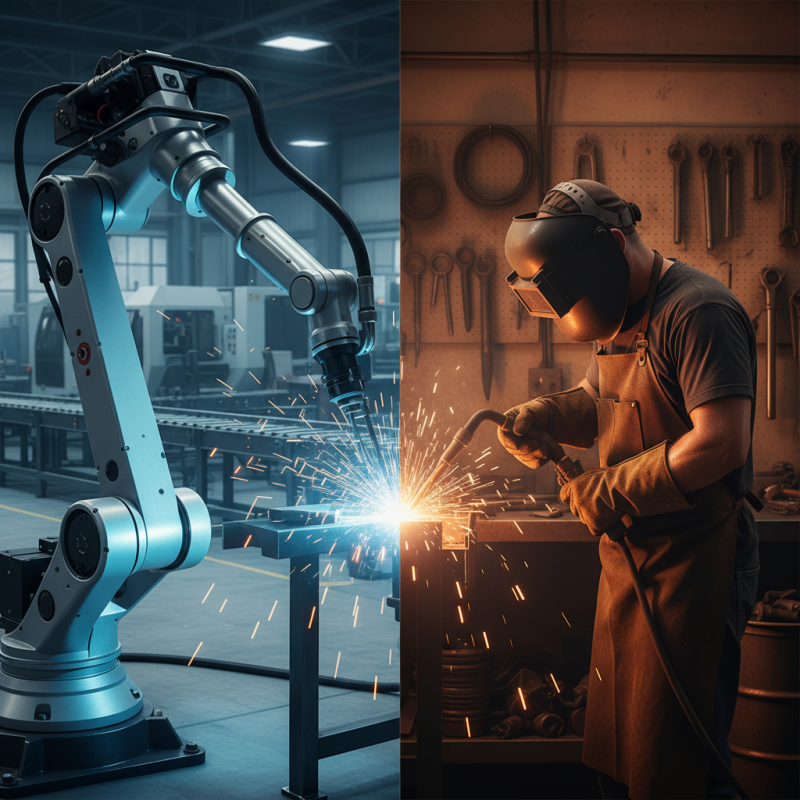
Robotic automation is redefining the welding industry. By incorporating advanced technology, companies can significantly enhance their welding processes. According to a report by the International Federation of Robotics, the use of robotic systems in welding can increase productivity by 30% to 50%. This efficiency is crucial in meeting rising market demands.
One of the key advantages of robotic automation is consistency. Robots perform the same task repeatedly with remarkable precision. Manual welding can vary, leading to imperfections. A study published in the Journal of Manufacturing Processes highlights that robotic welding can reduce defects by up to 90%. This not only improves product quality but also reduces material waste, benefiting both the economy and the environment.
Tips: Ensure proper training for operators regarding robotic systems. Understanding the technology enhances safety and efficiency. Additionally, regularly maintain equipment to avoid unexpected downtimes. Investing in these areas can lead to long-term success and reliability in welding operations.
Manual welding, while still prevalent, presents significant limitations that can hinder efficiency and quality. According to a study by the American Welding Society, human error accounts for nearly 70% of welding defects. This high margin of error can lead to costly rework and delays in production. Fatigue and inconsistent skill levels among manual welders can further exacerbate these issues, making it difficult to maintain high standards across all projects.
In contrast, robotic systems offer precision and reliability that manual techniques struggle to match. Research from the International Federation of Robotics indicates that automated welding processes can reduce cycle times by up to 30%. This efficiency not only boosts productivity but also enhances the consistency of weld quality. Robotic systems can execute repetitive tasks with greater accuracy, ensuring fewer defects and more reliable outcomes in manufacturing.
While the initial investment in robotic automation may be substantial, the long-term benefits are evident. A report from McKinsey & Company reveals that businesses can see a return on investment within three years due to decreased labor costs and improved product quality. However, transitioning to robotic systems requires careful planning and employee training to address potential resistance and skill gaps.
Embracing automation isn't just a choice; it's an opportunity to redefine operational standards in welding.
In the ever-evolving manufacturing landscape, robotic automation is gaining traction over manual welding.
Cost efficiency is a crucial factor in this shift.
According to industry reports, robotic welding systems can reduce labor costs by up to 30%.
This significant saving comes from decreased labor hours and reduced human error.
Manual welding, while flexible, often leads to increased rework and scrap, driving costs higher.
Moreover, the initial investment in robotic systems may seem steep, but the long-term savings are undeniable.
A study by the International Federation of Robotics (IFR) found that companies adopting robotics experienced a return on investment (ROI) within two to three years.
The average cost per welded joint is nearly 20% lower with robotic systems.
These figures paint a clear picture of how automation impacts bottom lines.
It's critical to consider not just the financial aspects. While robotics streamline processes, they may lack the adaptability of manual systems in complex tasks.
Balancing efficiency with practical capabilities is an ongoing discussion. As automation technology advances, manufacturers must continuously assess their strategies to remain competitive.
The decision isn't solely about cost savings; it’s about how to integrate technology effectively.
Robotic automation in welding offers a clear advantage in achieving consistent quality. Robots provide precision that manual welding simply cannot match. Each weld is made with precision timing and consistent power loads. This reduces the chances of defects, such as porosity or uneven penetration. The repeatability of robotic welds leads to a product that meets tight tolerances.
Manual welders are susceptible to fatigue and variations in technique. Over time, even experienced welders may have fluctuations in performance. In contrast, robots maintain the same parameters throughout operations. They do not tire and do not suffer from environmental distractions. This consistency translates into reliable performance over long production runs.
However, implementing robotic systems is not without challenges. Initial setup requires careful programming and calibration. There may be a learning curve for personnel to adapt to new technology. Regular maintenance is also essential to ensure optimal functioning. Despite these challenges, the benefits of superior quality and consistency often outweigh the drawbacks.
This chart compares the quality scores of welding produced by robotic automation and manual welding techniques. Robotic automation consistently delivers higher quality welds, achieving a score of 95, while manual welding scores only 75. This emphasizes the advantages of using robotic automation for quality consistency in welding processes.
Robotic welding solutions have revolutionized safety in manufacturing. Automated systems not only enhance precision but also significantly reduce hazards. High-temperature environments present risks to human welders. Robots handle extreme conditions without fatigue or risk of injury. This transformation is essential for maintaining a safe workplace.
In addition to reducing physical risks, robotic welding systems improve air quality. Fumes and smoke released during welding can harm human health. Robots limit human exposure to these harmful elements. The automation process ensures consistent ventilation systems are in place. However, the transition to robotic solutions is not without challenges. Training staff to operate and maintain these machines can be complex. They need proper education on technology and safety protocols.
It's also vital to address potential technical failures. Robots can malfunction, leading to production delays. Regular maintenance is crucial for safety and efficiency. In some cases, companies might hesitate to invest in automation. They may worry about the reliability of technology over time. Yet, the benefits often outweigh the risks when implemented correctly. Balancing human oversight with automation remains a key focus.
: Robotic automation enhances productivity by 30% to 50% and ensures precision. It reduces defects significantly.
Robotic welding can reduce defects by up to 90%, improving product quality and reducing waste.
Proper operator training is essential. Regular equipment maintenance is also crucial for reliability and efficiency.
Yes, robotic systems can lower labor costs by up to 30% due to fewer labor hours and reduced human error.
Initial costs may be high, but ROI is typically seen within two to three years due to long-term savings.
Yes, while efficient, robotic systems may struggle with complex tasks where manual flexibility is needed.
Companies assess both financial savings and process integration to understand the impact of automation.
Adaptability may be limited compared to manual welding, necessitating continuous evaluation of technology strategies.
Yes, improper training or maintenance can lead to unexpected downtimes and safety issues.
Balance efficiency with practical capabilities. It’s crucial to integrate technology effectively for long-term success.
In today's manufacturing landscape, many industries are considering the shift from manual welding to robotic automation. This transition is driven by significant advantages offered by robotic systems, including enhanced efficiency and precision. Robotic automation in welding processes not only improves consistency and quality of welds but also minimizes the risks associated with manual welding. By employing robotic solutions, companies can achieve superior weld quality while reducing human error and maximizing throughput.
Moreover, the cost efficiency of robotic automation represents another compelling reason for this transition. While the initial investment may be higher, the long-term savings in labor costs, increased production rates, and reduced material waste often outweigh these upfront expenses. Safety is also greatly enhanced through robotic welding solutions, as they help to limit personnel exposure to hazardous working environments. Thus, the question arises: Why switch from manual welding to robotic automation? The answer lies in the blend of improved quality, cost savings, and heightened safety that robotic systems provide.

Mobo Robot