Why Use Crawler Robots for Effective Bridge Inspection and Cleaning?

Time:2026-07-01 Author:Isabella
0%

In recent years, the structural integrity of bridges has become a major concern for civil engineers and urban planners. According to the Federal Highway Administration, around 42% of the nation's bridges are over 50 years old, necessitating innovative inspection methods. Why use a crawler robot for bridge inspection and cleaning? This question is critical as traditional methods often fall short. Manual inspections can be time-consuming and even risky.

Crawler robots have emerged as an efficient alternative. They are equipped with advanced sensors, providing real-time data on structural health. A study by the American Society of Civil Engineers highlighted that these robots reduce inspection time by up to 40%. However, relying solely on technology poses challenges. These robots can struggle in intricate designs, and their effectiveness can vary based on environmental conditions.

The integration of crawler robots is a step forward but requires careful consideration. While they enhance safety and accuracy, the ongoing assessment of their limitations is essential. Balancing technology with human expertise may offer the most reliable approach in maintaining bridge safety.
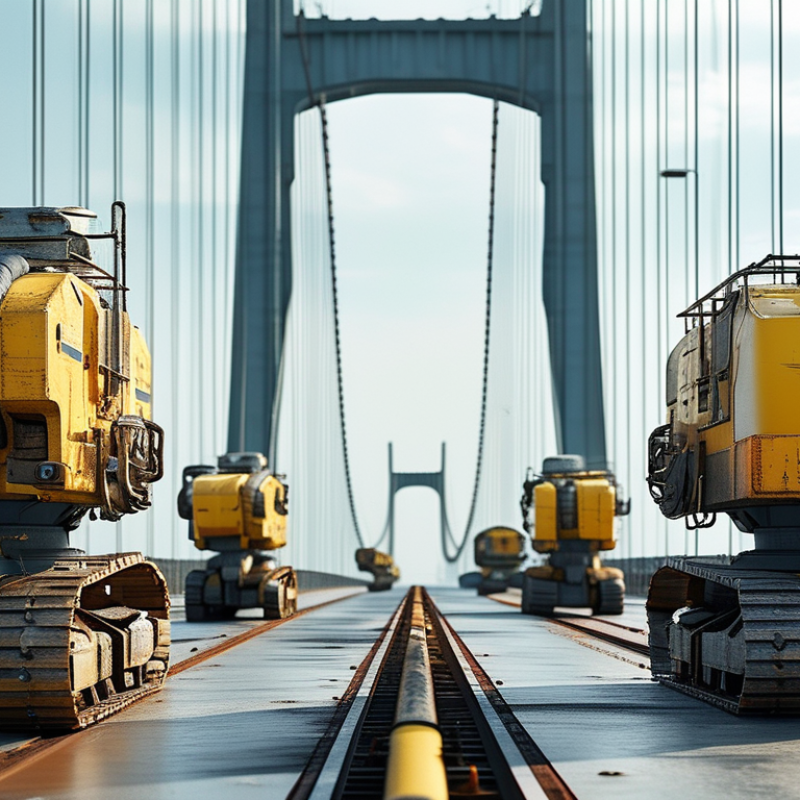
Why Use Crawler Robots for Effective Bridge Inspection and Cleaning?

The Role of Crawler Robots in Modern Bridge Inspection

Crawler robots have become essential tools in modern bridge inspection. They navigate complex structures with ease, providing crucial data. According to a recent report by the American Society of Civil Engineers, nearly 40% of U.S. bridges are over 50 years old, raising concerns for safety and maintenance. Traditional inspections can be risky and time-consuming. Crawler robots minimize human exposure to these hazards by reaching difficult areas.

These robots can perform visual inspections and collect data in real time. They utilize advanced sensors to detect cracks, corrosion, and other structural issues. The National Bridge Inventory notes that detailed inspections can reduce maintenance costs by 25%. However, crawler robots still face challenges, such as operating effectively in adverse weather conditions. Additionally, the technology requires skilled operators to analyze the data correctly.

The use of crawler robots is not without its flaws. They may miss subtle signs of wear or damage. Over-reliance on technology can lead to complacency. Regular human oversight is essential, even with automated systems in place. Balancing technology and human expertise is critical in ensuring bridge safety and longevity.

Why Use Crawler Robots for Effective Bridge Inspection and Cleaning?

Inspection Feature Traditional Method Crawler Robot Method Advantages
Access to Hard-to-Reach Areas Limited access, requires scaffolding Easily navigates complex structures Reduces time and labor costs
Data Collection Manual measurements, prone to errors Automated sensors and cameras High precision data collection
Safety of Workers High risk for inspectors on site Minimizes human presence at heights Enhanced worker safety
Speed of Inspection Long inspection times Rapid inspections with continuous data Increases overall efficiency
Maintenance Scheduling Reactive maintenance based on visible problems Proactive maintenance with predictive analytics Optimizes maintenance budgets

Advantages of Using Crawler Robots for Bridge Cleaning

Crawler robots are revolutionizing bridge inspection and cleaning. These autonomous machines offer several advantages that enhance safety and efficiency. They can navigate rough terrains and access hard-to-reach areas, minimizing the use of scaffolding or ladders. This reduces the risk to human inspectors who might otherwise work at dangerous heights.

Another key benefit is their precision. Crawler robots are equipped with advanced sensors and cameras that capture detailed images of bridge conditions. This technology allows for accurate assessments and timely maintenance. In some cases, these robots can identify issues like cracks and corrosion before they escalate. However, there are challenges. Data interpretation requires skilled personnel. Not every inspector may be familiar with robotic technologies, which creates a learning curve.

Crawler robots also help save time during inspections. Traditional methods can be labor-intensive and time-consuming. Crawler robots streamline this process, freeing up resources for other important tasks. However, maintenance of the robots themselves may pose its own issues. They need regular checks to ensure proper functioning. While they are generally reliable, occasional malfunctions can occur, leading to delays.

Technological Features of Crawler Robots in Inspections

Crawler robots have revolutionized bridge inspection, offering advanced technological features that enhance safety and efficiency. Equipped with high-definition cameras, these robots can capture clear images of structural components. Reports show that visual inspections alone can miss up to 30% of existing defects. Crawler robots significantly reduce this margin, ensuring no flaws go unnoticed.

Moreover, the integration of sensors and data analytics enables real-time monitoring. These robots can assess vital parameters such as stress levels and corrosion in real time. A study indicated that robotic inspections reduce inspection time by approximately 50% compared to traditional methods. This efficiency allows for quicker decision-making and prioritization of maintenance tasks, which is crucial in preventing unexpected failures.

Despite their advantages, the deployment of crawler robots still presents challenges. The initial setup costs can deter some agencies from adopting this technology. Additionally, training staff to operate these advanced systems requires time and resources. Navigating complex bridge designs can be difficult, and manual intervention may often be necessary. Adopting crawler robots is a step forward, but there's still room for improvement in their use and integration into existing workflows.

Usage of Crawler Robots for Bridge Inspection and Cleaning

Case Studies of Crawler Robots in Bridge Maintenance

Crawler robots have revolutionized bridge maintenance. Their ability to navigate hard-to-reach areas enhances inspection precision. In several case studies, these machines revealed critical structural issues often missed by traditional methods. For instance, ultrasonic sensors on a crawler detected early signs of fatigue in a steel bridge. Such proactive measures help prevent catastrophic failures and ensure public safety.

In another case, a crawler robot was deployed on a long-span bridge in a remote location. The data collected included images and material thickness measurements. Engineers were able to analyze the data thoroughly. The remote access also reduced the need for human climbers, minimizing risk. However, challenges exist. Robotics technology may struggle in environments with heavy traffic or adverse weather.

These instances illustrate the potential and the limitations of crawler robots in bridge maintenance. While they enhance efficiency and safety, continuous improvements are necessary. Future developments should focus on increasing operational versatility and reliability under different conditions.

Future Trends in Crawler Robot Technology for Infrastructure Care

Crawler robots are transforming infrastructure inspection and maintenance. These robotic systems offer innovative solutions for bridge inspections and cleaning. Their ability to navigate challenging terrains ensures comprehensive evaluations. Advanced sensors allow for detailed assessments of structural integrity. This automation leads to higher safety standards and cost savings for municipalities.

Future trends in crawler robot technology include enhanced mobility and intelligence. Innovations such as improved climbing mechanisms provide access to hard-to-reach areas. Machine learning algorithms will allow these robots to analyze data in real-time. This leads to quicker responses for maintenance needs. Additionally, eco-friendly cleaning solutions are being integrated, addressing environmental concerns while maintaining efficacy.

Despite the advantages, challenges remain. Robotic technology often faces limitations in extreme weather. Sensors can malfunction under certain conditions. Therefore, continued research and development are essential. Additionally, operators must remain well-trained to handle unexpected scenarios. Balancing technology with human oversight is crucial for optimal outcomes.

FAQS

: What are the main uses of crawler robots in bridge inspection?

: Crawler robots inspect complex structures and gather crucial data effectively. They reach difficult areas safely and efficiently.

How do crawler robots enhance inspection accuracy?

These robots use high-definition cameras and sensors, capturing detailed images. They can detect structural issues that traditional inspections might miss.

What are the benefits of using crawler robots over traditional methods?

Crawler robots reduce inspection time by around 50%. They help prioritize maintenance tasks quickly, preventing unexpected failures.

What challenges do crawler robots face during inspections?

They may struggle in adverse weather. Also, their operation often requires skilled personnel for data analysis and interpretation.

Can crawler robots completely replace human inspectors?

No, they should complement human efforts. Automation alone can lead to oversight, missing subtle signs of damage.

What is the impact of crawler robots on maintenance costs?

Detailed inspections from these robots can reduce maintenance costs by 25%. However, initial setup costs may be a barrier.

How critical is training for using crawler robots?

Training is essential. Staff must understand the technology and safe operational practices to maximize the robots' benefits.

Are there any downsides to relying on crawler robots?

Over-reliance on technology can create complacency. Regular human oversight is necessary to ensure accurate assessments.

How does real-time monitoring through crawler robots benefit inspections?

Real-time data allows for immediate assessment of structural parameters. This can significantly enhance decision-making and response times.

What improvement areas exist for crawler robots in inspections?

Navigation through complex designs needs refinement. Continuous integration into current workflows can also be enhanced for better efficiency.

Conclusion

The article "Why Use Crawler Robots for Effective Bridge Inspection and Cleaning?" explores the pivotal role that crawler robots play in modern infrastructure maintenance. As bridges age and require regular inspection and cleaning, these robots offer a proactive solution by accessing hard-to-reach areas safely and efficiently. The advantages of using crawler robots extend beyond mere accessibility; they enhance the accuracy of inspections and reduce the risk of human error.

Technologically advanced features enable these robots to conduct thorough evaluations and cleaning tasks, as demonstrated in various case studies showcasing successful applications in bridge maintenance. The article also looks forward to future trends in crawler robot technology, emphasizing their growing significance in ensuring the longevity and safety of infrastructure. Ultimately, this discussion answers the question of "Why use a crawler robot for bridge inspection and cleaning?" by highlighting the transformative impact of automation in the field.

Isabella

Isabella

Isabella is a dedicated marketing professional with a sharp focus on driving brand growth and engagement through strategic content creation. With an extensive background in digital marketing, she combines her passion for storytelling with her keen understanding of industry trends to deliver......