Top 5 Ways to Integrate AI with Your Welding Robots?

Time:2026-05-25 Author:Liam
0%

Integrating AI with existing welding robots is a crucial step towards enhancing productivity and precision in manufacturing. As industries evolve, the demand for smarter solutions increases. Understanding how to integrate AI with existing welding robots can seem daunting, yet it holds the key to unlocking numerous benefits.

Imagine a welding environment where robots adapt to real-time data. These systems could adjust their processes, leading to fewer defects and higher quality. However, the implementation requires careful planning and technical expertise. Assessing current technologies and identifying areas for improvement is vital.

While challenges exist, such as integration complexity, the rewards are significant. Effective AI integration can reduce downtime and enhance decision-making. It is essential to approach this transition thoughtfully, embracing both the potential benefits and possible setbacks. Fostering an environment of continuous learning will help teams develop the skills necessary for this journey. By focusing on practical applications, businesses can navigate the complexities of merging AI with welding technology successfully.
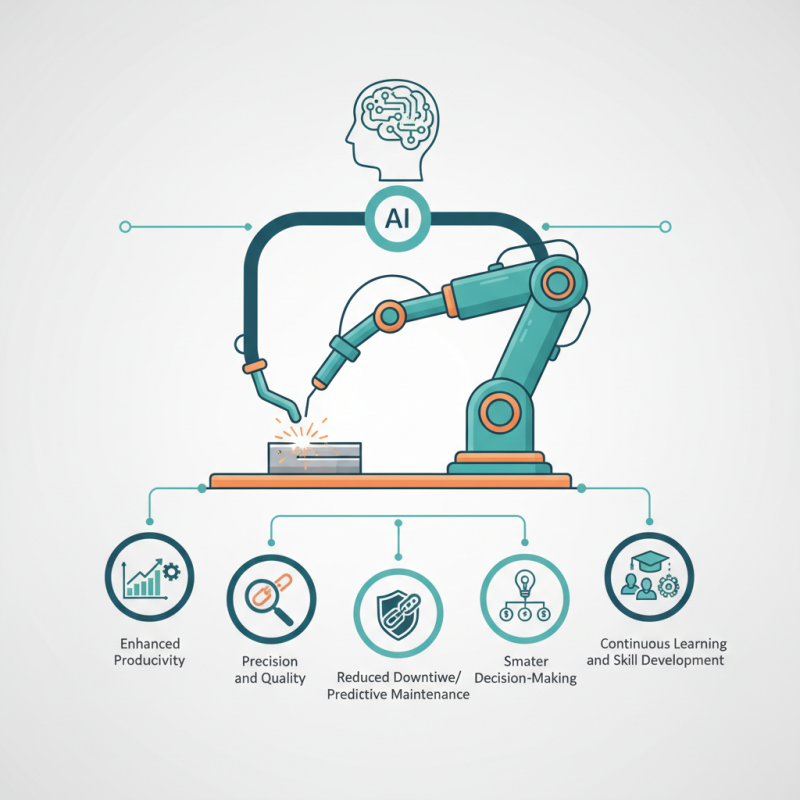
Top 5 Ways to Integrate AI with Your Welding Robots?

Top 5 Ways to Integrate AI with Your Welding Robots

Integrating AI with welding robots can enhance precision and efficiency. This technology not only streamlines operations but also reduces waste. Consider using machine learning algorithms to predict and adapt to welding conditions. This can ensure more consistent results and minimize defects.

When implementing AI, proper training data is essential. Ensure your robots are trained with high-quality, diverse datasets. Incorporating real-time feedback can also improve welding quality. Robots that learn from their environment are more capable of adapting to changes in material properties or environmental conditions.

Tips to keep in mind:
- Regularly update your AI models to reflect new data.
- Collaborate with engineers to fine-tune the AI systems.
- Monitor robot performance consistently to identify areas needing improvement.

AI integration requires ongoing evaluation. Analyze its impact carefully and adjust strategies as needed. By adopting AI thoughtfully, your welding operations can achieve remarkable enhancements.

Integration of AI with Welding Robots

Enhancing Precision: AI Algorithms for Accurate Welding Path Planning

Artificial Intelligence (AI) can significantly enhance welding robots' capabilities. AI algorithms improve welding path planning. By predicting the exact movements of the welding torch, these algorithms increase the precision of welds. This results in fewer defects and rework, saving time and resources. Incorporating AI into welding robots streamlines processes.

One effective tip is to utilize machine learning for data collection. Collecting data from previous welds can improve future performance. Adjusting settings based on historical data optimizes the welding process. Implementing feedback loops in the design helps refine the welding paths continuously.

Determining the right parameters can be challenging. Not all scenarios fit into pre-defined models. Experimental adjustments are sometimes necessary to achieve optimal results. Keep in mind, some welds may require more tuning than expected. Patience and careful observation can lead to improvements over time.

Real-Time Monitoring: Using AI for Welding Quality Inspection and Adjustment

Real-time monitoring has become crucial in welding processes. Incorporating AI into welding robots significantly improves quality. According to a recent report, 70% of manufacturers noted reduced defects in weld quality when using AI systems. These systems offer immediate feedback and adjustments, leading to a more consistent production process.

AI algorithms analyze data from various sensors during welding. They monitor parameters like temperature and speed effectively. This analysis allows for on-the-spot corrections, ensuring better results. A study indicates that companies implementing AI-driven quality inspection saw a 50% decrease in post-weld inspections. This reduction not only saves time but also cuts costs associated with rework.

Despite the benefits, challenges exist. Integrating AI requires a shift in workforce skills. Training employees is essential for maximizing AI's potential. A survey found that 60% of workers felt unprepared for this technological transition. Addressing these educational gaps is vital for long-term success in automating welding processes.

Top 5 Ways to Integrate AI with Your Welding Robots

Method Description Benefits Implementation Challenges
Real-Time Quality Inspection Utilizing AI to continuously evaluate weld quality during the welding process. Increased precision, reduced defects, and real-time feedback for immediate corrections. Requires advanced sensors and AI algorithms to be effective.
Process Parameter Optimization Using AI to analyze historical welding data to find optimal settings for different materials. Enhanced efficiency, minimal rework, and extended equipment lifespan. Data collection and analysis may be complex; requires robust data management.
Predictive Maintenance AI forecasts potential equipment failures before they occur based on usage patterns. Reduces downtime, lowers maintenance costs, and improves overall productivity. Requires integration of sensors and historical performance data.
Automated Adjustments Dynamic adjustments of welding parameters based on real-time feedback from quality inspection. Continually optimizes the welding process for varying conditions. Requires sophisticated control systems and may need frequent recalibration.
Data-Driven Decision Making Leveraging AI analytics to support business decisions related to welding operations. Improves strategic planning and process alignment across manufacturing. Needs robust data analysis tools and skilled personnel to interpret data.

Predictive Maintenance: AI Tools to Reduce Downtime in Welding Operations

Predictive maintenance is a game changer in welding operations. By leveraging AI tools, companies can monitor their welding robots more effectively. These tools analyze data from sensors and historical performance. They predict when a machine is likely to fail, allowing for timely interventions.

This approach significantly reduces downtime. Unscheduled repairs can be costly and disruptive. With AI, maintenance becomes proactive, not reactive. Data insights lead to optimal scheduling and resource allocation. This enhances efficiency and improves productivity in welding processes.

However, not every decision made from predictive insights will be perfect. Organizations may misinterpret data or face unexpected equipment issues. Continuous learning and adapting are necessary. Relying solely on AI predictions can lead to overconfidence. A balanced approach is essential for long-term success in automation.

Data Analytics: Leveraging AI for Process Optimization and Cost Reduction

Data analytics plays a crucial role in optimizing welding processes. Integrating AI can lead to significant cost reductions. A recent industry report indicates that companies using AI analytics can reduce operational costs by 20-30%. That’s a substantial saving for manufacturers. By analyzing data from welding robots, businesses can identify inefficiencies and streamline operations.

Effective data collection is essential. It’s vital to gather information from every welding cycle. This data reveals patterns and areas that need improvement. For example, tracking arc duration and heat settings can enhance weld quality. Regularly reviewing this data helps in making informed decisions.

Tip: Establish routine data reviews to keep performance aligned with goals. Setting specific targets can motivate teams. Regular feedback sessions can also improve engagement and results. Data-driven strategies pave the way for innovation. They allow for adjustments based on real-world feedback, making processes more adaptable. However, some companies may struggle with data overload, so clear guidelines for analysis are essential. Balancing data with human insight often leads to the best outcomes.

Collaborative Robots: Integrating AI to Improve Human-Robot Interaction in Welding

The integration of artificial intelligence (AI) in collaborative welding robots is transforming the manufacturing landscape. According to a recent market report, the collaborative robotics segment is expected to exceed $12 billion by 2025. This growth emphasizes the importance of making robots capable of human-like interaction. Properly integrated AI systems enhance communication between robots and human operators, ultimately improving safety and efficiency.


In real-world applications, welding robots equipped with AI can learn from their environments. They can adjust their operations based on the feedback from human workers. However, challenges remain. Many robots struggle with complex tasks that require fine motor skills or decision-making in unpredictable situations. A study highlighted that over 40% of workers found that current robots sometimes misinterpreted user commands. This indicates a need for improved training data and algorithms to create a more intuitive interface.


Moreover, integrating AI into collaborative robots can help identify anomalies in real-time. AI can analyze data from welding processes, allowing for precise adjustments. However, the lack of standardization in data collection often leads to inconsistencies. Addressing these issues is crucial for the continuous improvement of AI-integrated welding robots. Ensuring a seamless human-robot collaboration remains a key focus as industries evolve.

FAQS

: How does

I enhance welding robots?

What type of data is essential for training AI in welding?

High-quality, diverse datasets are crucial for effective training.

How often should AI models be updated?

Regular updates are necessary to reflect new data and improve performance.

What is predictive maintenance in welding operations?

It uses AI to anticipate machine failures, allowing proactive interventions.

What are some challenges with AI in collaborative robots?

Robots may struggle with complex tasks and misinterpret user commands frequently.

Can AI improve human-robot interaction?

Yes, AI enhances communication, leading to better safety and efficiency in operations.

How do organizations sometimes misuse predictive insights?

Companies can misinterpret data or become overconfident in AI predictions.

What aspect of robot performance should be monitored?

Consistent monitoring helps identify areas needing improvement and adaptation.

What role does feedback play in AI integration?

Real-time feedback improves the quality and adaptability of welding robots.

Why is standardization important in AI data collection?

Lack of standardization can lead to inconsistencies, hindering the effectiveness of AI systems.

Conclusion

To effectively enhance the capabilities of existing welding robots, it’s essential to understand how to integrate AI with existing welding robots. The top five methods involve enhancing precision through AI algorithms for accurate welding path planning, ensuring real-time monitoring for quality inspection and adjustments, and implementing predictive maintenance tools that can significantly reduce downtime.

Additionally, leveraging data analytics allows for process optimization and cost reduction, while integrating collaborative robots enhances human-robot interaction in welding operations. By embracing these approaches, manufacturers can improve the efficiency, accuracy, and reliability of their welding processes, leading to greater productivity and enhanced operational outcomes.

Liam

Liam

Liam is a dedicated marketing professional with a profound expertise in the industry, where he excels at highlighting the unique advantages of our core products. With a keen understanding of market trends and consumer needs, Liam frequently updates our company’s professional blog, providing......