Removing old paint can seem like a simple maintenance task. In practice, it involves dust control, substrate protection, waste handling, and worker safety. Laser paint removal uses concentrated light to heat coatings until they loosen, vaporize, or break apart. A trained operator adjusts wavelength, pulse, and speed for each surface. Brick, steel, timber, and historic plaster react differently. On a steel railing, the beam may reveal clean metal beneath a thin coating. On timber, excessive heat can scorch fibers or leave dark marks. These details matter when evaluating environmental performance. The central question remains: Is laser paint removal eco-friendly?
The answer depends on the project, equipment, and controls. Laser systems can reduce chemical stripper use, airborne dust, and contaminated wastewater. They may also support precise removal, leaving more sound material for repair. Yet electricity consumption, replacement filters, protective equipment, and removed paint waste still carry impacts. Some coatings contain lead or other hazardous compounds, so fumes and residues require professional assessment and approved disposal. Environmental agencies and equipment manufacturers recommend testing a small area before full treatment. A reputable contractor should document the coating type, ventilation plan, extraction method, and waste route. Independent safety guidance is valuable, but manufacturer claims should not be accepted without context. Results vary. That is the uncomfortable part. A low-waste process can still be inefficient when operators use excessive passes or poor settings. This article examines laser removal through practical performance, lifecycle impacts, and site safety. It also considers when traditional methods may create fewer overall impacts. Readers can judge claims using evidence, not attractive technology alone.
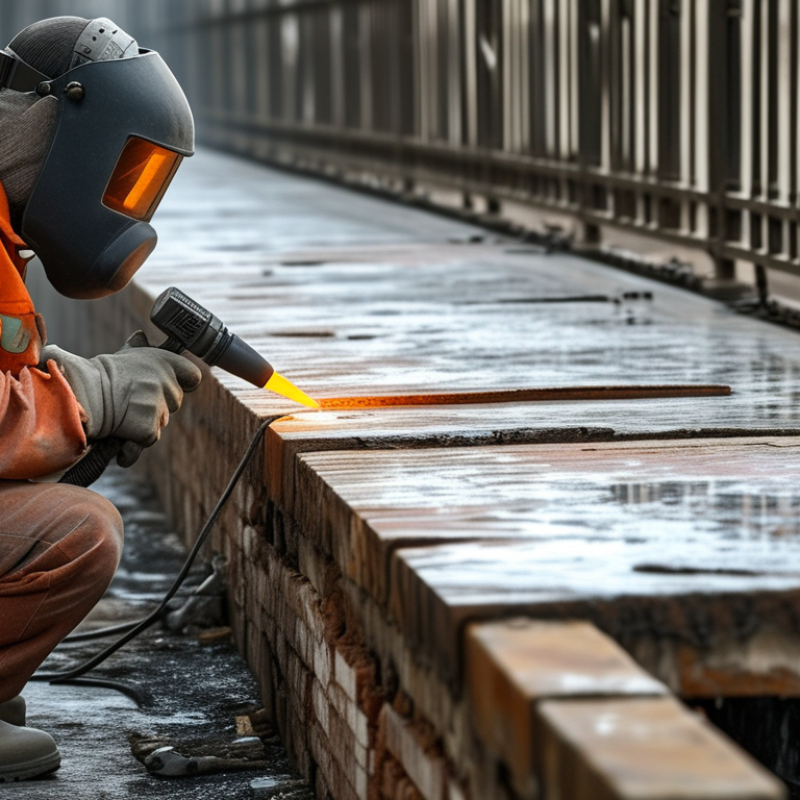
Laser paint removal uses concentrated light to break the bond between paint and its surface. A pulsed laser scans across metal, stone, or masonry in thin passes. The coating absorbs the beam, heats rapidly, and flakes, vaporizes, or turns into fine dust. The base material usually reflects more energy, so operators can remove paint with limited surface damage.
The process is precise, but not magically clean. Laser settings must match the coating thickness, pigment, and substrate. Dark paint may absorb energy quickly, while pale coatings can require slower passes. A 2023 technical review in the Journal of Cleaner Production reported that laser cleaning can reduce chemical use and secondary waste compared with traditional stripping methods. However, the same process can create fumes and airborne particles. OSHA sets an airborne lead action level of 30 micrograms per cubic meter and a permissible exposure limit of 50 micrograms over eight hours under its construction standard. Old coatings may contain lead, so testing, local extraction, and respiratory protection remain essential. ISO 11553-1 also identifies laser processing as a machinery safety concern, requiring controlled work areas and protection from reflected beams. In practice, laser removal feels remarkably clean beside a scraper and solvent tray. It still demands disciplined monitoring.
| Data Dimension | Typical Information | Environmental and Practical Significance |
|---|---|---|
| Process definition | Laser paint removal uses a focused beam of light to heat, vaporize, or detach paint and other surface coatings from a substrate. | The process can remove coatings without abrasive blasting media or liquid chemical strippers. |
| How the process works | The laser scans the coated surface in controlled pulses or continuous passes. The coating absorbs the energy, breaks down, and is collected by extraction equipment. | Selective energy delivery can reduce contact with the underlying metal, stone, or composite when the settings are correctly controlled. |
| Common laser wavelengths | Industrial systems commonly use near-infrared sources around 1.06–1.08 micrometres, while carbon-dioxide systems commonly operate at approximately 10.6 micrometres. | Wavelength selection affects how efficiently different coatings and substrates absorb laser energy. |
| Coatings that may be removed | Suitable applications can include paint, powder coating, oxide layers, corrosion products, varnish, and some industrial residues. | Results depend on coating thickness, pigment, adhesion, moisture, contamination, and the material beneath the coating. |
| Substrate compatibility | Common substrates include steel, aluminium, stone, masonry, and selected engineered materials. A test area is normally required before full treatment. | Incorrect power, pulse duration, or scanning speed can discolor, melt, crack, or otherwise damage the substrate. |
| Waste generation | The coating becomes airborne particles, fumes, or condensed residue that must be captured and disposed of according to its chemical composition. | Laser removal can reduce secondary abrasive or liquid waste, but it does not eliminate hazardous waste when the original coating contains hazardous substances. |
| Air-emission control | Local exhaust ventilation, suitable filtration, and enclosure or extraction systems are important because thermal decomposition can produce dust, fumes, and volatile compounds. | Effective capture protects workers and prevents contaminants from spreading into the surrounding environment. |
| Water and chemical use | The cleaning stage is generally dry and does not require immersion baths, chemical stripping solutions, or process water. | Reduced water and chemical use can lower wastewater treatment needs, provided that extraction and waste handling are properly managed. |
| Energy consumption | Electricity use varies with laser power, coating thickness, removal rate, scanning speed, surface area, and the number of passes required. | The environmental benefit depends partly on the electricity source and whether the laser process avoids more resource-intensive alternatives. |
| Precision and selectivity | Beam size, pulse duration, power density, and scanning pattern can be adjusted for localized or large-area treatment. | High precision can help preserve valuable components and reduce unnecessary removal of the base material. |
| Comparison with abrasive blasting | Laser cleaning does not use abrasive grit, so it avoids spent blasting media and reduces mechanical impact on the surface. | It may reduce solid waste, although airborne coating particles and captured residues still require controlled handling. |
| Comparison with chemical stripping | Laser removal can avoid the purchase, storage, application, and disposal of liquid paint strippers. | This can reduce chemical exposure and wastewater risks, but thermal fumes may still require specialized controls. |
| Safety requirements | Enclosed or controlled work areas, interlocks, beam shielding, eye protection, ventilation, and trained operators are required for safe operation. | Laser radiation and coating fumes present separate hazards that must be assessed before work begins. |
| Overall eco-friendly assessment | Laser paint removal can be a lower-waste and lower-chemical alternative, but it is not automatically environmentally harmless. | The overall impact depends on electricity consumption, coating composition, extraction efficiency, filter disposal, equipment life, and the alternative method used for comparison. |
Note: Actual removal performance and environmental impact should be verified through a controlled surface test, coating analysis, ventilation assessment, and waste classification.
: It uses concentrated light to loosen paint from metal, stone, wood, or masonry. The coating absorbs energy, then flakes, vaporizes, or becomes fine dust. The base surface usually reflects more energy. It is precise, not magical.
A trained operator scans the painted surface in thin, steady passes. Small test patches help determine suitable laser settings. Loose residue is collected with controlled vacuum equipment. The surface is inspected after treatment.
The method can work on metal, stone, wood, and masonry. Each material reacts differently to heat and reflected light. Wood may scorch, while stone may discolor. Testing remains necessary.
Paint thickness, color, pigment, and surface texture affect performance. Dark coatings often absorb energy quickly. Pale coatings may require slower passes. Glossy or layered paint can need several treatments.
It may reduce chemical use and abrasive waste. However, it still consumes electricity and creates fumes. Contaminated dust and residue require controlled collection. “Eco-friendly” needs careful qualification.
Operators need suitable eye protection for the laser wavelength. Protective clothing, gloves, ventilation, and controlled access are also important. A nearby fire extinguisher adds practical protection. Reflected light can still injure eyes.
Yes, excessive energy may scorch wood or melt plastic. It can also discolor stone or affect metal properties. Heat marks may appear after rushed work. Test first.
Local extraction should capture fumes near the treatment area. Vacuum equipment should collect loose particles without sweeping them airborne. Older coatings may contain hazardous substances. Respiratory protection and surface testing remain important.
Another method may suit narrow corners, deep textures, or uneven coatings. Thick paint may require slower passes or repeated treatment. The operator should stop when smoke increases or the surface warms. Results can be imperfect.
Laser paint removal uses concentrated laser energy to heat and lift paint from a surface without relying on large amounts of chemical stripper or abrasive media. The process can be adjusted for materials such as metal, stone, masonry, wood, and selected coatings, depending on the paint type, surface condition, and laser settings. A typical project involves inspecting and preparing the area, testing a small section, applying controlled laser passes, collecting loosened residue, and checking the surface before finishing or repainting.
Is laser paint removal eco-friendly? In many situations, it can be a more environmentally responsible option because it may reduce chemical waste, dust, water use, and secondary surface damage. However, it is not automatically impact-free. Electricity consumption, removed paint residue, fumes, and equipment disposal still require careful management. Operators should use suitable ventilation, protective eyewear, controlled access, and appropriate waste-handling procedures. The method may also be unsuitable for heat-sensitive materials, complex surfaces, or coatings that release hazardous substances when heated, so professional assessment and testing are essential.

 Mobo Robot