Cleaning laser equipment is not a routine wiping task. Dust, vapor, and residue can alter how a beam travels, creating dangerous reflections from polished metal, glass, or wet surfaces. How to protect workers from laser reflection during cleaning begins with understanding the equipment, the material being removed, and the beam’s possible path. A trained supervisor should review the laser class, service instructions, and site-specific hazards before work starts. Do not rely on appearance alone. A surface may look harmless while reflecting invisible radiation.
Effective protection combines isolation, controlled access, suitable eyewear, and verified shutdown procedures. Workers should use approved lockout methods when possible, then confirm that stored energy and beam emission are absent. Beam stops, non-reflective covers, and designated cleaning tools can reduce stray reflections near the work area. Eyewear must match the laser wavelength and required optical density; ordinary safety glasses may provide no meaningful protection. Keep hands, jewelry, phones, and shiny tools away from the beam path. Small details matter.
Experienced teams still make mistakes. A damp cloth can leave a bright film, and an angled tool can redirect energy toward a nearby worker. That risk deserves a pause. Supervisors should document inspections, refresh training, and investigate near misses without blaming individuals. Manufacturer guidance and qualified laser safety professionals remain essential references, especially when cleaning procedures change. Safe work is not merely careful work; it is planned, observed, and questioned before exposure occurs.
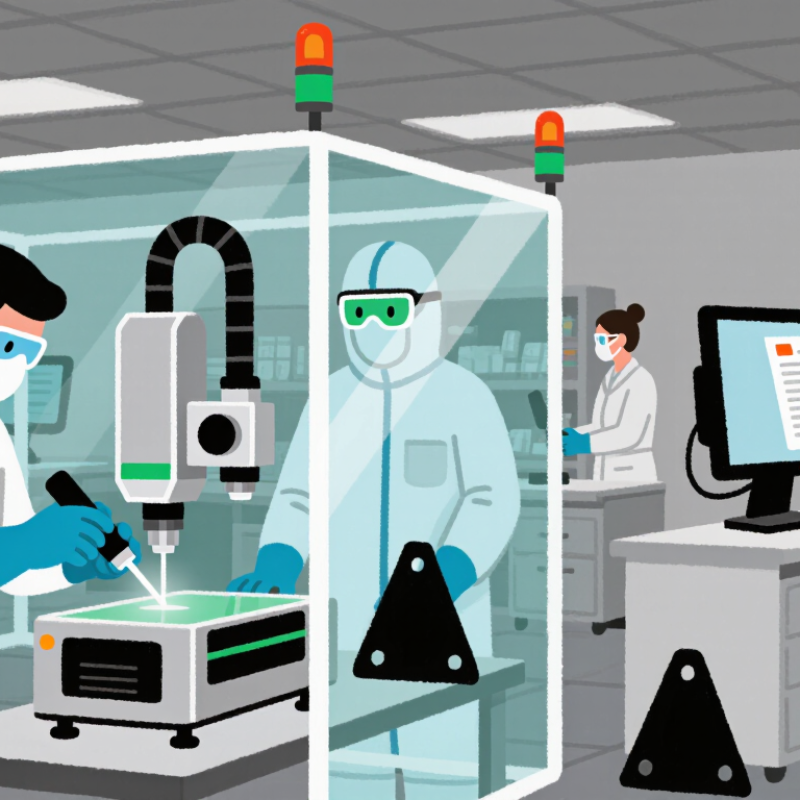
Laser reflection hazards often appear during cleaning, not operation. Dust, residue, or a wet surface can change a beam’s direction unexpectedly. Polished metal, glass, ceramic, and liquid films may create specular reflections. These reflections can remain hazardous even when the main beam looks weak. The Occupational Safety and Health Administration’s Technical Manual identifies reflected beams as a serious eye exposure route. IEC 60825-1 also treats Class 3B and Class 4 lasers as capable of causing severe eye injury. Cleaning can increase risk because workers move close to beam paths and remove protective covers.
A practical assessment should map the beam, likely reflection points, and the worker’s eye height. Inspect mirrors, tools, windows, and damp surfaces before wiping. Do not rely on dark glasses alone. Their protection depends on wavelength, optical density, and correct fit. The American National Standard for Safe Use of Lasers recommends controlled areas, suitable barriers, and trained personnel. One weak point remains: a checklist may miss a temporary reflection from a cloth, tray, or cleaning liquid. Recheck after every surface changes.
Tips: Stop the laser before cleaning whenever possible. Use written lockout procedures. Remove jewelry and reflective tools. Test surfaces with a low-risk method, never by looking into the beam. Wear wavelength-specific protective eyewear. Keep your head outside the beam plane. Document unusual reflections, even when no injury occurs. Small observations can prevent a serious exposure.
Cleaning moves workers closer to beam paths. Wet surfaces, dust, and residue can redirect energy unexpectedly. Stop before wiping.
Polished metal, glass, ceramic, and liquid films may produce bright reflections. A small reflected spot can still injure the eyes. Darkness does not prove safety.
Inspect mirrors, tools, windows, trays, jewelry, and damp surfaces. Check likely reflection points at normal eye height. Small spots matter.
Identify the wavelength, power, pulse duration, beam diameter, and operating mode. Consider where faces, eyes, and hands may move during awkward tasks. The equipment manual may miss hidden paths.
Use physical barriers, warning signs, and restricted entry. Keep doors closed where practical. Position operators outside likely reflection paths. Untrained workers should not cross the boundary.
Choose matte, non-combustible barriers with enough height to block bounce paths. Avoid shiny temporary covers. They may redirect energy toward the operator. Inspect shields before each shift.
Select eyewear for the exact wavelength, optical density, and exposure level. Check its markings, fit, and condition before use. Eyewear is backup protection, not the main control.
Stop when the surface, enclosure, workpiece angle, or access conditions change. Recheck the area before restarting. That pause may feel excessive.
Stop the laser whenever possible and follow written energy-isolation procedures. Remove reflective tools and jewelry. Keep your head outside the beam plane. Test emergency stops before work begins.
Record temporary reflections, damaged barriers, near misses, and changing surface conditions. A checklist can fail to capture a cloth or liquid film. Review small observations before they become serious exposures.
How to protect workers from laser reflection during cleaning begins with identifying reflective surfaces, possible beam paths, and areas where scattered or redirected laser energy may reach people. A careful hazard review should consider the laser’s power, wavelength, operating position, nearby equipment, and cleaning tasks. Worker exposure must then be assessed, with controlled work zones established to restrict access and clearly communicate potential hazards.
Effective protection may include suitable barriers, temporary shields, beam stops, and properly selected laser protective eyewear. Cleaning should be performed only under safe operating conditions, such as reducing power, disabling the beam when practical, securing reflective tools, and maintaining stable beam alignment. Workers should follow written procedures, avoid placing hands or objects in the beam path, and verify controls before starting. Regular training, supervision, equipment inspections, and periodic reviews help confirm that protective measures remain effective and that changing workplace conditions are addressed promptly.

 Mobo Robot