Why Is Robotic Laser Cleaning Worth It for Small Shops?

Time:2026-11-18 Author:Charlotte
0%

For a small fabrication shop, cleaning is rarely just cleaning. It can mean stripping rust from a bracket, removing paint from a weld, or preparing a greasy surface before repair. Each task takes time away from paid production. Robotic laser cleaning promises a more repeatable process, but its value depends on the shop’s actual workload—not the shine of a machine demonstration.

The labor context is real. A 2024 Deloitte and Manufacturing Institute study estimated that U.S. manufacturing could need 3.8 million workers by 2033, with 1.9 million jobs potentially unfilled. That projection covers the wider sector; it does not prove a laser cleaner will save a particular shop money. Still, it highlights why owners are examining automation for repetitive work. Is robotic laser cleaning worth the investment for small shops? The answer depends on cleaning hours, part volume, material variety, and the cost of existing methods. A unit sitting idle between occasional jobs may be hard to justify. A machine used daily on consistent parts could tell a different story.

There are practical details, too. Operators need training, suitable laser safety controls, and a plan for fume extraction and maintenance. These requirements affect both cost and workflow. The honest answer may be less exciting: laser cleaning is not ideal for every coating, surface, or budget. A careful comparison should include purchase price, setup time, consumables, downtime, and trial results on representative parts. Get the numbers in writing. Then test the process on the shop floor, where real parts rarely behave like a brochure.
Why Is Robotic Laser Cleaning Worth It for Small Shops?

What Robotic Laser Cleaning Is and How It Works

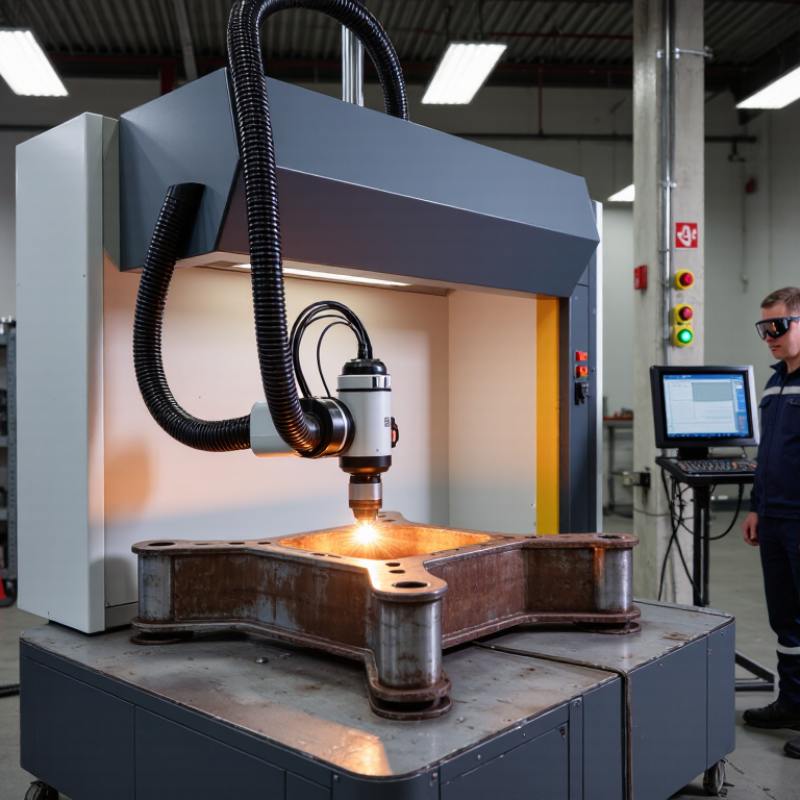
A robotic laser cleaning cell combines a laser source, a programmed arm, and a controlled work area. The laser scans a surface and removes rust, paint, or oxide through short energy pulses. Contaminants absorb the pulses and break away, while the operator adjusts power, speed, and distance for the material. No abrasive media. A fume extractor captures airborne residue.

IFR’s World Robotics 2024 report counted 4,281,585 industrial robots operating worldwide at the end of 2023. That figure shows wider automation adoption, not proof that laser cleaning pays for every small shop.

The practical benefit is repeatable movement across parts such as brackets or weld seams. Results still depend on coating thickness, surface shape, and careful settings. A missed edge can remain dirty; excessive exposure can damage the base material. That trade-off deserves a test.

Tips: Start with a small sample coupon. Record the settings and inspect the surface under bright light. Keep extraction and protective enclosures in place, and train operators on the specific system. For a low-volume shop, compare setup time and maintenance with the labor and consumables currently used. Automation can help, but it is not effortless.

How a Small-Shop Laser Cleaning System Operates

A small-shop laser cleaning system removes coatings through controlled pulses of light. The operator selects pulse energy, scan speed, and beam width, then guides the handpiece across a test area. Contaminants absorb the pulses and loosen; a nearby extraction unit captures much of the dust and vapor. The substrate can remain cooler than with broad mechanical abrasion, but poor settings may discolor thin metal or leave residue.

It is not magic.

A practical setup starts with a marked test patch, steady hand movement, and extraction positioned close to the work. Inspect the surface under angled light before increasing power. The U.S. Department of Energy’s 2022 Industrial Decarbonization Roadmap estimates that industry produces about 23% of U.S. energy-related carbon emissions; that sector-wide figure is not proof that one cleaner reduces a shop’s footprint. Track actual power use and job time. Laser Institute of America guidance also emphasizes controlled access and wavelength-matched eye protection, because scattered reflections can remain hazardous. A test patch can still mislead on layered rust. Recheck after the first full pass.

Where Robotic Laser Cleaning Can Improve Shop Work

In small fabrication shops, robotic laser cleaning can make recurring surface preparation less dependent on hand pressure and operator stamina. A programmed path can remove light rust, oxide, or coating from brackets, weld areas, and machine parts. That helps before inspection, repair, or finishing. Small details matter. Fixtures hold parts steady, while a technician checks edges and adjusts the scan for corners or uneven surfaces. No process suits every material. Test a hidden area first, since heat-sensitive finishes and thin sheet can react differently.

A compact cell can handle repetitive parts while workers prepare the next job or clean areas by hand. This may reduce abrasive media use and limit contact with grime, but it does not eliminate dust or fumes. Extraction, shielding, training, and access controls remain essential; follow equipment guidance and assess the material before processing. The setup takes time. Small batches may not justify programming and fixturing, and awkward parts still need human judgment. That trade-off is easy to underestimate. A short trial on actual shop parts gives a more realistic view of cycle time, finish quality, and operator workload.

Why Is Robotic Laser Cleaning Worth It for Small Shops? - Where Robotic Laser Cleaning Can Improve Shop Work

Shop task How laser cleaning can help Potential shop-floor benefit Practical considerations
Rust removal before repair or coating A laser can remove rust from suitable metal surfaces without blasting media or chemical stripping solutions. Reduces handling and cleanup associated with loose abrasive media; a programmed path can make repeat areas more consistent. Results depend on the metal, rust condition, and settings. Capture fumes and debris, and verify the surface is suitable for the next process.
Paint or coating removal Controlled laser passes can remove some coatings from metal parts, including selected areas rather than an entire component. Can help with local rework and reduce the need to mask or strip parts using a separate chemical process. Coating chemistry and thickness affect suitability. Identify hazardous coatings before processing and use appropriate extraction and protective measures.
Weld-joint and pre-weld preparation A programmed cleaning path can remove selected surface contaminants near a weld or joining area. Repeatable positioning may reduce variation between parts in recurring jobs. The required cleanliness level depends on the material and joining procedure. Confirm results with the applicable process requirements.
Oxide removal and surface rework Laser cleaning can remove certain oxides from compatible metal surfaces, with settings selected for the material and target area. May allow focused treatment of a part without applying a cleaning step to surfaces that do not need it. Test on representative parts first. Excessive or unsuitable exposure can alter the surface, so process control is important.
Cleaning repeated parts or fixtures A robot can follow a saved motion path for recurring parts when the part location and setup are repeatable. Can reduce repetitive manual movement and make cycle-to-cycle coverage more consistent. Programming, fixturing, part variation, and changeover time matter. Manual handling may remain preferable for occasional or highly varied jobs.
Small-batch and mixed repair work A shop can use laser cleaning for selected jobs while retaining existing methods for parts that are unsuitable or faster to process another way. A targeted setup can complement existing equipment instead of requiring every cleaning task to use one process. Compare setup, labor, extraction, safety, and maintenance needs against current methods before investing.
Worker exposure and housekeeping Laser cleaning avoids loose blasting media and liquid stripping chemicals, but it can generate airborne particles and fumes. May simplify some cleanup tasks when paired with suitable extraction and a controlled work area. Laser systems require a risk assessment, suitable guarding or enclosure, trained operators, appropriate eyewear, and effective fume capture.

Suitability and results vary with the material, contaminant, surface condition, equipment, and process settings. Test representative parts and compare total operating requirements before adopting a new cleaning method.

Costs, Safety Requirements, and Practical Limitations

For a small shop, the purchase price is only part of the cost. Budget for a guarded work area, fume extraction, protective equipment, operator training, and maintenance. Quotes may omit installation or electrical upgrades. That matters. Compare total ownership costs with current consumables and labor, using actual job volumes rather than optimistic estimates.

Laser cleaning can remove coatings without abrasive media, but the beam remains a serious eye and skin hazard. Use suitable guarding and interlocks, and follow the equipment supplier’s risk assessment and operating instructions. Ordinary shop glasses are not enough. Fumes and fine particles also need capture; residue should not drift toward nearby benches. Keep the work zone controlled.

Results depend on coating thickness, surface shape, and the material underneath. On thin sheet, excess dwell time can discolor or damage the substrate. Deep pits, corners, and large panels may require slow, careful passes, making throughput less impressive than a demonstration suggests. Test a small coupon first. It is easy to overestimate the savings before measuring real cycle times. Some jobs will still be cheaper by hand.

How Small Shops Can Assess Whether It Is Worthwhile

A small shop should judge robotic laser cleaning by its own parts, labor, and production schedule—not by headline claims. Track how long workers spend removing rust, paint, or residue, including setup and cleanup. Then compare that baseline with a supervised trial on representative parts. Record cleaning time, surface condition, rework, and downtime. A shiny test piece proves little if awkward corners still need handwork.

The 2023 Deloitte and MAPI Smart Manufacturing Survey found that 86% of manufacturers viewed smart factory initiatives as a likely driver of competitiveness over the next five years. That is useful context, not proof that a cleaning system will pay off for a small shop. Build a simple payback estimate using your actual labor cost, weekly cleaning volume, training, maintenance, and required safety controls. Include quieter costs, such as floor space and time spent qualifying settings. A spreadsheet can flatter the case. Be cautious with optimistic utilization assumptions.

Tips: Measure several typical jobs before requesting a demonstration. Ask the supplier to clean your own parts, and inspect edges and recesses under consistent lighting. Include the operator’s setup time. If work arrives irregularly, calculate payback at low, typical, and busy volumes. The answer may be “not yet”—and that is useful.

FAQS

Which shop tasks can robotic laser cleaning handle?

It can remove light rust, oxide, or coatings from brackets, weld areas, and machine parts. It may help before inspection, repair, or finishing. Not every surface.

Does robotic cleaning remove the need for handwork?

No. A compact cell can handle repetitive parts, but corners and awkward shapes may still need careful manual cleaning. Human judgment remains useful.

How should a shop check whether a material is suitable?

Test a hidden area or small coupon first. Thin sheet and heat-sensitive finishes may discolor or suffer damage. Test first.

What safety measures does the process need?

Use suitable guarding, interlocks, training, and protective equipment. Capture fumes and fine particles, and keep the work zone controlled. Ordinary shop glasses are not enough.

What costs should a small shop include?

Count the guarded area, extraction, protective equipment, training, and maintenance. Check whether installation or electrical upgrades are included. That matters.

How can a shop estimate whether the system will pay off?

Compare actual labor and consumable costs with the system’s total costs. Use real weekly job volumes, not optimistic assumptions. A spreadsheet can flatter the case.

What should a trial measure?

Test representative shop parts. Record setup and cleaning time, finish quality, rework, and downtime. Inspect edges and recesses under consistent lighting.

When might robotic laser cleaning not be worthwhile?

Small batches may not justify programming and fixturing. Deep pits, large panels, and awkward parts can slow the work. Some jobs may still cost less by hand.

Conclusion

Robotic laser cleaning uses a controlled beam to remove rust, paint, residue, or other surface contaminants, while robotic motion helps guide the cleaning process consistently. A small-shop system typically combines a laser source, a movable robotic arm or positioning unit, controls, and appropriate safety enclosures. Operators set the cleaning path and parameters for the workpiece, then monitor the process and inspect the result. This approach may suit repeatable jobs such as preparing metal parts for repair, coating, or inspection, especially when manual cleaning is slow or produces uneven results.

Is robotic laser cleaning worth the investment for small shops? The answer depends on workload, material types, required finish, and available budget. Shops should compare equipment and setup costs with potential savings in labor, consumables, and rework, while accounting for training, maintenance, ventilation, protective measures, and safe operating space. The technology may be less practical for occasional jobs, delicate surfaces that need extensive testing, or workplaces without room for suitable safeguards. A trial on representative parts and a realistic cost assessment can help a shop decide whether the system fits its needs.

Charlotte

Charlotte

Charlotte is a seasoned marketing professional with a deep understanding of the company's portfolio and a passion for elevating its presence in the market. With a keen eye for detail and a commitment to excellence, she ensures that our professional blog is regularly updated with insightful articles......