What Are Top Robotic Welding Power Source Failures in 2026?

Time:2026-09-18 Author:Aria
0%

Robotic welding power sources are the electrical heart of automated production cells. In 2026, their failures often appear as unstable arcs, unexplained stops, or inconsistent weld penetration. These symptoms can waste material before operators identify the real cause. The central question is: What are the common failures in robotic welding power sources? Typical answers include overheated inverter modules, damaged IGBT components, cooling restrictions, loose power connections, and faulty feedback sensors. Wire-feeding problems may also look like power-source failures. That confusion makes accurate diagnosis essential.

Experienced maintenance teams inspect error codes, waveform behavior, cooling airflow, grounding, and cable condition together. A blocked filter can raise internal temperature. A weak ground connection can create spatter and arc instability. Moisture near connectors may produce intermittent faults. Small details matter. Preventive checks should follow the manufacturer’s duty-cycle limits and service procedures. Technicians should also compare actual welding current with programmed values, rather than trusting the display alone. Software updates can improve control, but they may introduce compatibility concerns with older robots or feeders. That possibility deserves attention.

This guide examines the leading robotic welding power source failures expected in 2026. It connects visible welding defects with electrical, thermal, mechanical, and control-system causes. The discussion reflects practical troubleshooting methods, manufacturer guidance, and safety-focused maintenance principles. Still, no single checklist fits every cell. Some failures remain difficult to reproduce. Careful records, verified measurements, and qualified service support provide the most reliable path toward repair and reduced downtime.
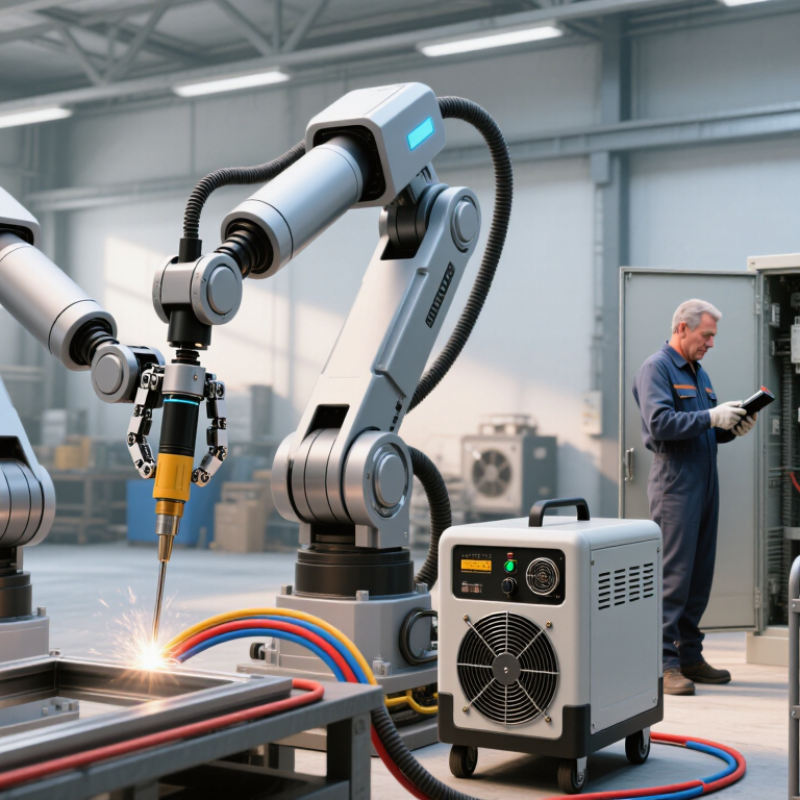
What Are Top Robotic Welding Power Source Failures in 2026?

Robotic Welding Power Source Failures: Definition and Operating Context

Robotic Welding Power Source Failures: Definition and Operating Context

A robotic welding power source converts electrical input into controlled arc energy. It works with the robot, wire feeder, torch, shielding gas, and control system. A failure occurs when output becomes unstable, unavailable, or unsafe for production. The fault may be electrical, thermal, mechanical, or software-related. It is rarely an isolated box problem.

In 2026, common failures include overheated inverter modules, damaged output cables, unstable current feedback, and cooling restrictions. Dust can block air passages around the power source. A loose ground connection may create erratic arcs, spatter, and false quality alarms. Voltage dips can also interrupt welding sequences, especially during heavy plant loads. Technicians should compare actual current and voltage with programmed values, then inspect connectors under load. Measurements matter more than assumptions.

Small details reveal larger problems.

A darkened terminal, unusual fan noise, or repeated thermal warnings deserves attention. Preventive checks should record operating temperature, duty cycle, cable condition, fault codes, and maintenance history. Qualified personnel must isolate electrical energy before opening equipment. I have seen teams replace a control board when a corroded connector caused the real fault. That mistake costs time and hides the underlying risk. Diagnostic software helps, but it can mislead when sensors drift or data is incomplete. A reliable investigation combines measured evidence, service records, visual inspection, and controlled testing. Some failures remain intermittent, which makes patience part of the repair process.

Common 2026 Failure Types in Robotic Welding Power Sources

Robotic welding power sources in 2026 face several recurring failure types. Thermal overload remains common when cooling passages collect dust, spatter, or workshop fibers. A blocked fan can make the cabinet feel hot before an alarm appears. Field technicians often find weak airflow first.

Input-power problems create another serious risk. Loose terminals, phase imbalance, and unstable voltage can damage capacitors and inverter modules. Aging capacitors may show no visible swelling, yet produce arc instability under heavy current. That detail is easy to miss during a quick inspection. Sudden voltage changes can also trigger repeated shutdowns and unexplained error codes.

Control communication failures are increasingly important in connected robotic cells. Damaged cables, poor grounding, or network noise may interrupt commands between the power source, controller, and welding torch. The machine may move correctly while the arc remains weak or absent. Moisture inside connectors can worsen the fault after overnight cooling. I have seen maintenance teams replace a control board when a loose connector caused the real problem. That mistake costs time. It also hides a basic inspection gap.

Operators should record alarm timing, output current, cabinet temperature, and cooling performance. Comparing these details with weld appearance can separate electrical faults from wire-feeding or torch problems. Still, diagnostic software is not perfect. A clean screen does not prove a healthy power source. Physical checks remain necessary, especially around fans, terminals, grounding points, and high-current connections.

Electrical, Thermal, and Software Causes of Power Source Failures

What Are Top Robotic Welding Power Source Failures in 2026?

Electrical failures remain common in robotic welding cells. Loose busbar connections can create arcing, voltage drops, and irregular weld penetration. A darkened terminal often signals heat damage, not simple dirt. Inverter modules may also fail after repeated input-voltage fluctuations. The International Federation of Robotics reported 541,302 industrial robots installed worldwide in 2023, a 10% increase from 2022. More automated cells mean more power supplies operating under continuous duty. However, industry datasets rarely isolate welding power-source failures. That limitation deserves attention.

Heat leaves clues. Blocked filters, failed cooling fans, and undersized ventilation can raise internal temperatures rapidly. Thermal stress may weaken capacitors, circuit boards, and switching modules. The problem often appears during long production runs, then disappears after cooling. Deloitte’s 2024 Smart Manufacturing and Operations Survey found that 86% of manufacturers viewed smart manufacturing as important for competitiveness. Yet connected equipment can expose software weaknesses. Firmware mismatches, corrupted parameter files, and communication timing errors may trigger nuisance shutdowns or unstable arc control. Software hides faults. Technicians should compare alarm history with waveform data, cabinet temperature, and cooling performance. This diagnosis is not foolproof. A thermal alarm may begin with a poor electrical connection, while a software fault may only reveal an aging component. Physical inspection still matters.

Diagnostic Steps for Identifying Robotic Welding Power Source Problems

Robotic welding power source failures often appear as arc instability, sudden shutdowns, weak penetration, or repeated fault codes. Diagnostic work should begin with the symptom, not the suspected component. Record when the problem occurs, including weld duration, current level, and cabinet temperature. A fault during cold startup points elsewhere than a fault after long production cycles.

Make the cell safe and isolate electrical energy before inspection. Check incoming voltage, fuses, cooling airflow, and visible cable damage. Loose power terminals can create heat marks and intermittent faults. Inspect the work return connection closely; a dirty clamp or corroded contact can imitate a failing power source. Keep the evidence.

Review the source’s alarm history and compare actual current with programmed values. If output drops under load, test the output cables, connections, and control signals before replacing the power unit. Measure voltage only with properly rated instruments and qualified personnel. Never open an energized cabinet. Thermal sensors, blocked filters, and failed cooling fans deserve attention during overheat events. A flashing code is not a diagnosis. Experienced technicians still make this mistake. I have found that replacing a board too early can hide a simple grounding problem, while an apparently clean connection may fail under vibration. Record every test, even the uninteresting ones.

Repair, Prevention, and Maintenance Strategies for 2026 Systems

What Are Top Robotic Welding Power Source Failures in 2026?

Robotic welding power sources increasingly fail through heat, contamination, and unstable electrical connections. Common symptoms include arc interruptions, fault codes, weak penetration, and unexpected shutdowns. Dust can block cooling paths, while moisture corrodes terminals and control boards. Loose busbar joints create localized heating. That damage is easy to miss.

The International Federation of Robotics reported 541,302 industrial robot installations worldwide in 2023. More robotic cells mean more power sources requiring disciplined maintenance. Technicians should inspect cooling fans, filters, torch cables, grounding points, and internal connectors during scheduled stops. Thermal imaging can reveal abnormal heat before a rectifier or switching module fails. Qualified personnel should isolate electrical energy before opening equipment.

Repair records should identify the original failure, not only the replaced part. A recurring overtemperature alarm may indicate poor cabinet ventilation, excessive duty cycle, or a failing fan. Software and communication faults also deserve attention. Firmware updates, parameter backups, and connector inspections can prevent repeated production losses. According to the U.S. Department of Energy’s Operations & Maintenance Best Practices guide, predictive maintenance may reduce downtime by 35–45% and maintenance costs by 25–30%.

Numbers vary by facility. They are not guarantees. In practice, teams often postpone inspections until welding quality changes. That habit is expensive. A monthly checklist, quarterly thermal scan, and trend review of alarms provide a stronger defense than emergency repair alone. I have seen maintenance plans fail because operators recorded fault codes without recording temperature, load, or environmental conditions. Better data usually leads to better repairs.

Maintenance insight: Thermal damage to power semiconductors and cooling-system problems account for the largest share of reported failure modes in robotic welding power sources. Preventive actions should prioritize airflow inspection, coolant-flow verification, cabinet cleaning, thermal monitoring, cable and connector checks, and scheduled capacitor and sensor testing.

FAQS

What are common electrical failures in robotic welding power sources?

Loose busbar connections can cause arcing, voltage drops, and uneven weld penetration. Darkened terminals may indicate heat damage.

How can overheating damage a welding power source?

Blocked filters, failed fans, or weak ventilation can raise cabinet temperatures quickly. Capacitors, circuit boards, and switching modules may weaken.

Why does a power source fail only during long production runs?

Heat may build gradually during continuous welding. The fault can disappear after cooling, which makes diagnosis less obvious.

Can software problems cause unstable welding?

Yes. Firmware mismatches, damaged parameter files, and communication timing errors may cause shutdowns or unstable arc control.

What information should technicians record during a failure?

Record weld duration, current level, cabinet temperature, alarm codes, and operating conditions. Keep every test result.

What should be checked before replacing the power unit?

Inspect output cables, terminals, control signals, fuses, cooling airflow, and the work return connection. A dirty clamp can imitate equipment failure.

How should technicians investigate repeated fault codes?

Compare alarm history with actual current, waveform data, cabinet temperature, and cooling performance. A flashing code is not a diagnosis.

What safety steps are required during inspection?

Make the cell safe and isolate electrical energy first. Never open an energized cabinet. Use properly rated instruments and qualified personnel.

Why can a clean connection still cause problems?

Vibration may expose an intermittent connection that looks normal during inspection. Physical checks are useful, but not perfect.

What mistake can lead to unnecessary repairs?

Replacing a circuit board too early may hide a grounding problem. Test simple connections before condemning expensive components.

Conclusion

Robotic welding power sources are essential for maintaining stable arc performance, accurate heat input, and consistent weld quality in automated production. What are the common failures in robotic welding power sources? Typical problems in 2026 systems include unstable output current, arc interruption, overheating, cooling-system faults, damaged cables or connectors, sensor errors, communication failures, and software or control-board malfunctions. These issues may result from electrical surges, poor grounding, excessive dust, inadequate ventilation, thermal stress, moisture, outdated control logic, or incorrect operating parameters.

Effective diagnosis should begin with reviewing alarm codes, inspecting connections, checking input and output readings, testing cooling performance, and examining software communication between the power source and robotic controller. Preventive strategies include scheduled cleaning, thermal monitoring, cable inspection, firmware management, proper ventilation, and routine calibration. Early detection, accurate fault isolation, and timely component replacement can reduce downtime, protect welding equipment, and support safer, more reliable robotic production throughout 2026.

Aria

Aria

Aria is a dedicated marketing professional with a deep passion for innovative strategies and a keen understanding of our company's product offerings. With a wealth of experience in the industry, Aria excels at crafting engaging content that highlights the unique features and benefits of our......